 Articles
What IxDF taught me—and what real-world UX demanded next
Intro
When I joined the Interaction Design Foundation in 2020, I wasn’t trying to build a personal brand. I was trying to get unstuck.
At the time, I was a Digital Creative Director at an agency, more than 20 years into a design career that had spanned consulting, independent work, and leadership roles. On paper, I was experienced. In practice, I was burned out.
Agency work had taught me how to move quickly and think strategically, but after years of short-lived projects and client turnover, I wanted something different—work with more depth and lasting impact.
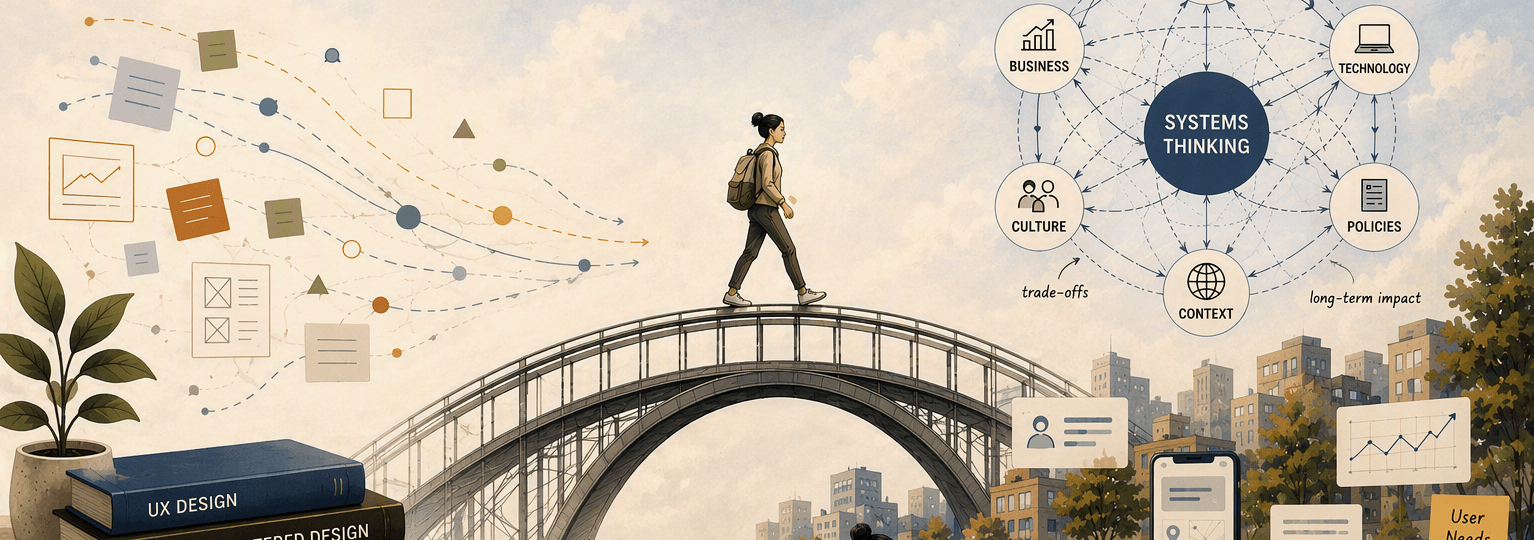
I wanted to move into product and UX design, where design decisions could shape how systems function over time, not just how something looks in a moment.
The challenge was that wanting to make that shift wasn’t the same as being ready for it.
I knew I needed to strengthen parts of my foundation—research, systems thinking, interaction models, and structured problem solving. That’s what led me to IxDF.
IxDF gave me a way to learn UX more deliberately. It helped me build vocabulary, deepen my understanding of core methods, and connect instinctive decisions to clearer principles.
That foundation mattered. It helped me transition into enterprise UX roles in financial services and healthcare, and contribute more meaningfully on teams.
But looking back, that was only the first part of the story.
What I didn’t understand yet
Courses taught me frameworks, methods, and best practices. They gave me a foundation I absolutely needed.
But once I was working in enterprise product environments—especially in healthcare—I started running into a different kind of problem.
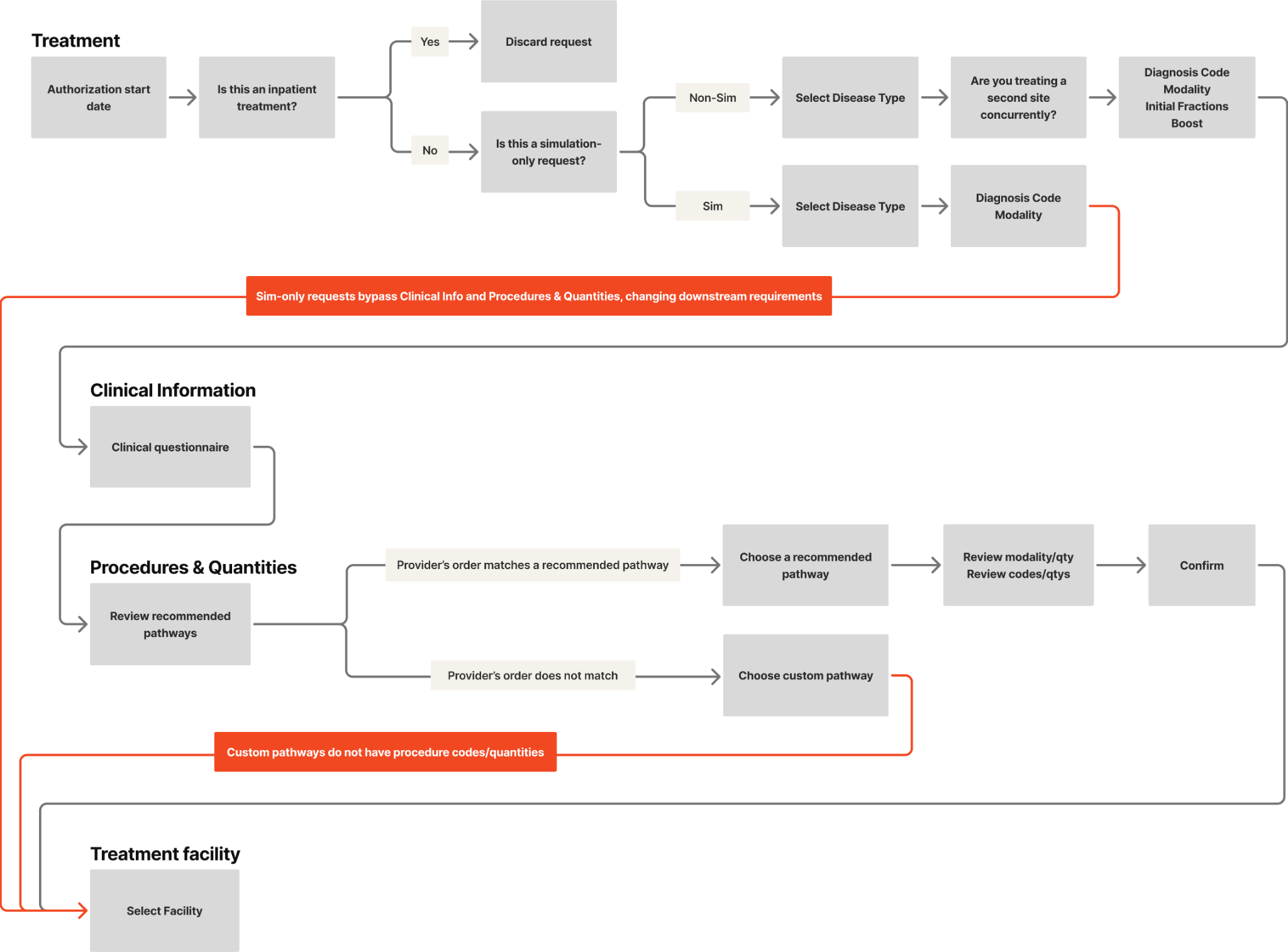
The challenge often wasn’t that a screen needed redesigning. It was that the underlying structure of the workflow was unclear. Steps weren’t consistently defined. Completion points were ambiguous. Teams could be aligned on the goal, but still working from different assumptions about how something was supposed to behave.
That’s where the real work actually begins.
UX maturity, I realized, isn’t just about knowing the right methods or producing better artifacts. In complex environments, it often comes down to recognizing when the real problem is structural—and helping define the models and logic that make a workflow understandable and buildable.
That shift changed how I think about design.
I still care about users and interfaces. But my role now is often less about designing screens and more about defining how workflows operate—where complexity should live, how it should be structured, and how teams can align around something consistent enough to scale.
IxDF helped me build the foundation for that shift. But the most meaningful growth came later, when I had to apply those ideas in systems that were messy and interdependent.
What IxDF helped me build
What IxDF gave me at the time wasn’t more experience—it was a more structured way of thinking.
One of the biggest shifts came from learning to think about experience over time. Journey mapping helped me move beyond isolated touchpoints and see how interactions connect across steps and contexts.
Research was another key area. I learned when and how to apply different methods, which helped me approach problems more rigorously and collaborate more effectively with research teams.
Design systems also changed how I thought about consistency. In agency work, consistency often comes from brand guidelines. In enterprise environments, it comes from structure—shared patterns that support scalability.
What mattered most wasn’t any single course. It was the accumulation of these ideas into a more systematic mindset.
That foundation helped me move from feeling like an outsider trying to break into UX to contributing meaningfully in enterprise environments.
And for a while, that felt like the goal.
What changed
As I gained more experience, I realized the work required something beyond that foundation.
The biggest shift was in how I approached problems.
Earlier, I focused on improving screens and flows. Now, I focus on understanding the structure behind them.
Instead of asking, “How should this interface work?” I ask, “How is this workflow supposed to operate?”
- What are the steps?
- Where do decisions happen?
- What does completion look like?
- Are those definitions consistent across the system?
In complex environments, those questions often surface problems that aren’t visible in design files. A workflow might function, but still be difficult to understand or maintain because the structure isn’t clearly defined.
That’s where I’ve found I can have the most impact.
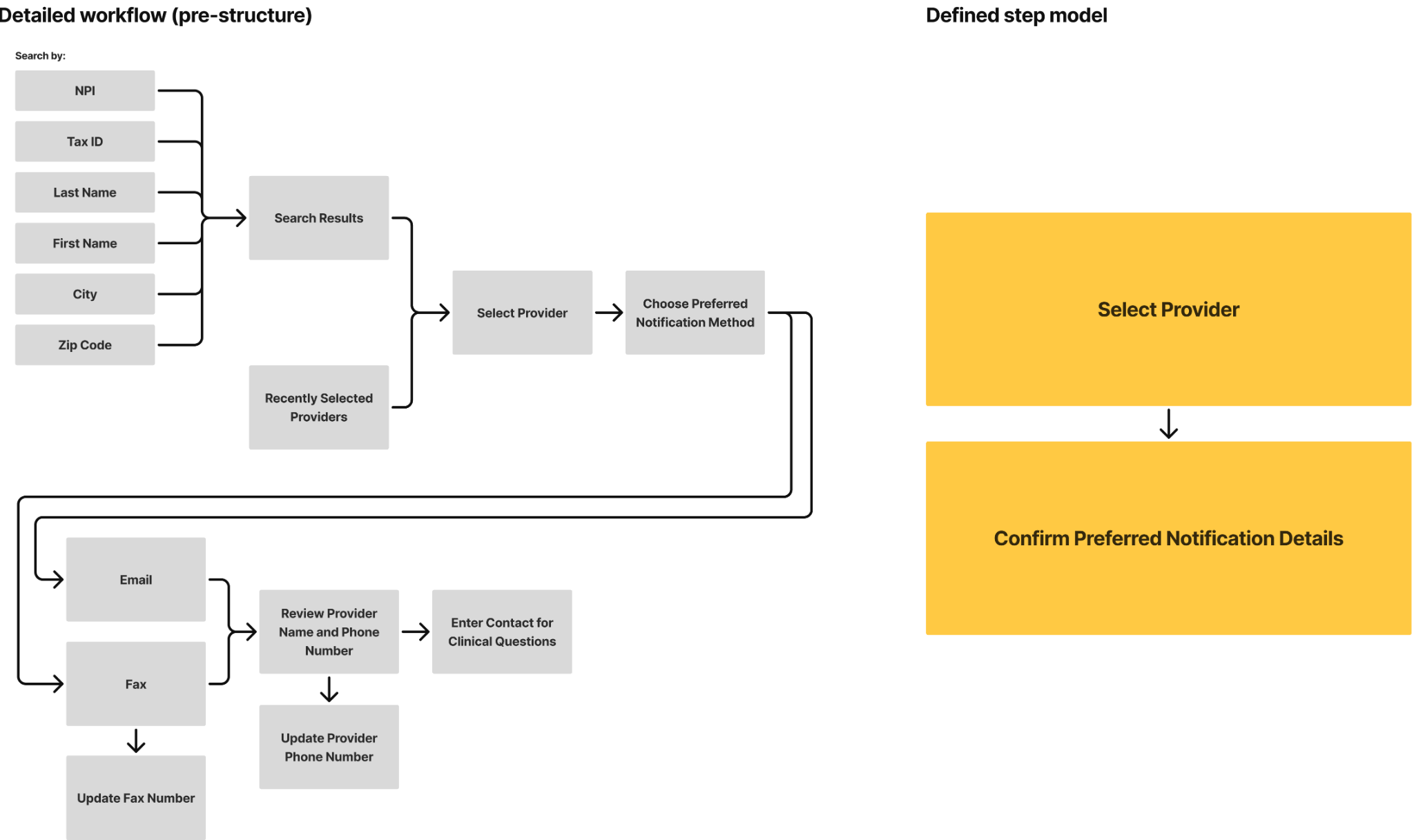
Much of my work now focuses on helping teams align around how a system should behave, not just what it should look like. That often means defining:
- how workflows are broken into steps
- how related inputs are grouped and validated
- what constitutes completion
- how these patterns apply consistently across the system
When those pieces are clear, everything improves.
Design decisions become easier. Engineering can build with less guesswork. QA has clearer criteria. And users have a better sense of what’s happening.
I still design interfaces, but those decisions are now grounded in structure rather than isolated improvements.
In that sense, my role has shifted from designing parts of a workflow to helping define the system that connects them.
How IxDF fits now
My relationship with IxDF has evolved.
Early on, it was a primary learning tool. It helped me build fundamentals and gain confidence during a critical transition.
Now, its role is more selective. Most of my growth comes from applying what I’ve learned in real-world systems—working through ambiguity and aligning teams.
That said, IxDF still has value. I use it occasionally to revisit core concepts or sharpen my thinking.
What has changed is how I approach learning. Earlier, learning was something I pursued to move forward. Now, it happens alongside the work itself. The problems I’m solving day-to-day are often the biggest source of growth.
IxDF helped me build the foundation. Experience has been what deepened it.
What I’d tell others
If you’re trying to move into UX—or grow within it—focus less on collecting credentials and more on developing how you think.
Foundational learning matters. It gives you vocabulary, context, and a way to approach problems more deliberately.
But foundations are not the same as mastery. At some point, growth comes from recognizing the real problem underneath what you’re seeing. In complex environments, that’s often not the interface—it’s the structure behind it.
So I’d suggest:
- Build your foundation deliberately, not superficially
- Don’t confuse cleaner interfaces with deeper solutions
- Pay attention to how teams interpret and implement the work
- Be patient—growth comes from repeated cycles of learning, applying, and adjusting
The goal isn’t just to become more skilled. It’s to become more thoughtful about what kind of problem you’re solving—and what structure it actually requires.
That’s what I’m still learning.